
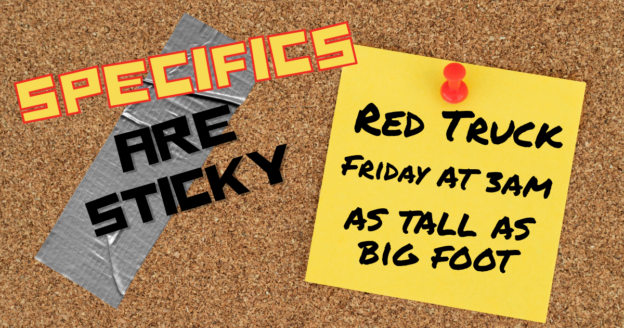
When writing radio ads, the details are everything. The difference between an ad that fades into the background and one that sticks in a listener’s memory often comes down to one thing – specifics.
Vague statements like “we care about our customers” or “we have great prices” are forgettable. They’re wallpaper. They’re limp and useless. But say, “We answer the phone in three rings, even on Sundays,” and suddenly the listener sees it, believes it, and remembers it. Specifics build credibility. They paint a picture. They give the brain something to hold onto.
When writing for the ear, generalities slide right off. But details? Details dig in. They light up the senses. The sound of tires crunching gravel as someone pulls into their driveway. The smell of bacon on a Saturday morning. Say “2:13 a.m.” instead of “the middle of the night.” Those small touches invite the listener to feel the ad, not just hear it.
People don’t remember generalities or trite phrases. They remember moments. So, give them moments – real, colorful, sensory moments. That’s where emotion lives. That’s where trust is built.
Radio is a theater of the mind. You must paint a picture. If you want your ad to be listened to and remembered, don’t aim to be clever. Aim to be clear, bold, and tangible. Give your audience something they can see, smell, hear, or feel.
Pull up a sampling of past ads you’ve written – you’ll probably notice they could use a lot more “color”. Start writing more specifically – today. If you’re short on specifics to work from, go ask your clients better questions (remember last week’s article?), and get the details you need to create better ads!
Generalities and vagueness are forgettable. Specifics are sticky. Make your message stick.